Woman Enters Dance Challenge Despite Confirmed Absence Of Rhythm
March 21, 2026
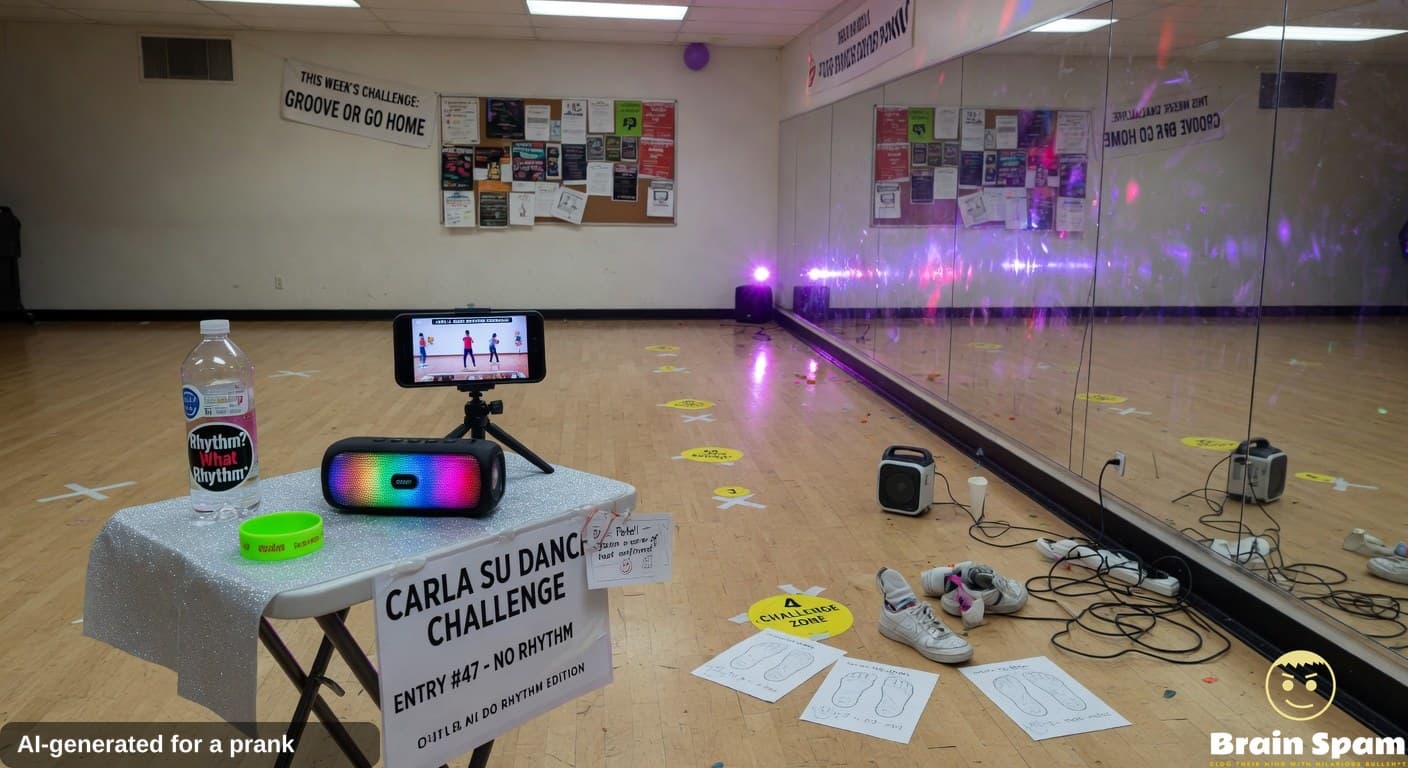
On March 21 2026 Carla Su submitted her entry into a fast spreading online dance challenge after years of medical tests established her complete lack of any rhythmic sense. The video showed her moving through the required steps in a living room setting with movements that bore no relation to the accompanying track yet somehow drew immediate attention from thousands of viewers scrolling through their feeds. Friends and family members who had long avoided dancing alongside her watched in growing disbelief as the clip gained traction and comments sections filled with questions about whether the performance was intentional. Local dance groups began circulating the footage during their practice sessions leading some participants to experiment with deliberately mismatched timing in their own routines. The original challenge rules emphasized precision and synchronization but her version appeared to rewrite those expectations without any official announcement from the platform hosting the videos.
Medical Diagnosis Reviewed
Physicians who had conducted the original evaluations on Carla Su found themselves fielding calls from reporters and curious onlookers seeking clarification on what exactly constitutes an absence of rhythm in a medical context. Their earlier findings had described her condition as a rare disconnect between auditory processing and physical coordination that made standard dance moves impossible to execute on beat. As the video spread further dance challenge organizers noticed a spike in similar submissions from people who claimed they too lacked any natural timing yet wanted to participate anyway. This development forced platform moderators to review their content guidelines since the new entries generated engagement levels comparable to those from skilled performers. Meanwhile home practice spaces across neighborhoods started filling with individuals repeating the same off beat sequences in front of mirrors while trying to capture their own versions for upload.
Viewer Reactions Escalate
Viewers who stumbled across the entry during routine scrolling sessions reported spending extended periods rewatching segments to determine if any hidden pattern existed beneath the apparent chaos of the movements. The challenge which typically rewards tight execution suddenly became a space where mismatched steps attracted more shares than polished ones prompting many amateur dancers to adjust their approaches accordingly. Community centers that host regular dance nights observed participants arriving with printed stills from the video in hopes of recreating the style during group activities. This shift created an atmosphere where instructors struggled to maintain focus on traditional techniques while fielding requests for guidance on performing without rhythm. The growing collection of related clips began trending alongside the original challenge which only amplified the reach of Carla Su entry far beyond its initial audience of a few hundred friends.
Platform Adjustments Underway
Platform algorithms that normally prioritize videos with high synchronization scores started surfacing additional off beat submissions at similar rates creating a feedback loop that kept the trend alive into the following weeks. Dance enthusiasts who once viewed the challenge as a test of skill now found themselves analyzing timing failures as a form of creative expression instead. The situation expanded to include reports of people attempting the routine in public spaces such as parks and grocery store aisles where their efforts drew crowds of onlookers who joined in with their own variations. This widespread participation led some fitness trackers to register unusual patterns in user activity as individuals incorporated the uncoordinated sequences into daily routines without realizing the original medical context behind the viral clip.
Related Searches
🎉Gotcha!
This satirical story was created by a BrainSpam user using the BrainSpam platform — a tool for generating fictional and humorous stories for entertainment.
Create your own at BrainSpam.com
Disclaimer: This article was created by a user of BrainSpam and is intended solely for satire, parody, and entertainment purposes.
BrainSpam is a platform that allows users to create fictional, humorous, or exaggerated stories about real or imaginary people and events.
The content above is not factual reporting and should not be interpreted as statements of fact. It reflects the creative expression of the individual user who created it, not the views of BrainSpam or its operators.
Real persons may be referenced as part of parody or commentary. Any resemblance to actual events or individuals is used in a satirical or fictional context.
BrainSpam does not verify or endorse user-generated content published on this platform.
More from CrazyDanceChallenge.com
Entertainment
Esme Caldwell's Confident Stumble Becomes The Internet's Hottest New Dance Trend
Family
Sammy Liddell Sparks Joy With Family Dance Routine
Entertainment
BREAKING EXCLUSIVE: VINCE CALLOWAY'S SHOCKING DANCE GOES VIRAL BUT IT IS REALLY JUST LOSING BALANCE WITH CONFIDENCE AND THE INTERNET CANNOT HANDLE IT
Entertainment
Cody marsh attempts trending routine in kitchen and rearranges spice rack permanently
Entertainment
SHOCKING EXCLUSIVE: GRETA VOX CHOREOGRAPHS FULL ROUTINE KNOWING ONLY THE CHORUS IN UNPRECEDENTED DANCE TWIST YOU WON'T BELIEVE
Entertainment